
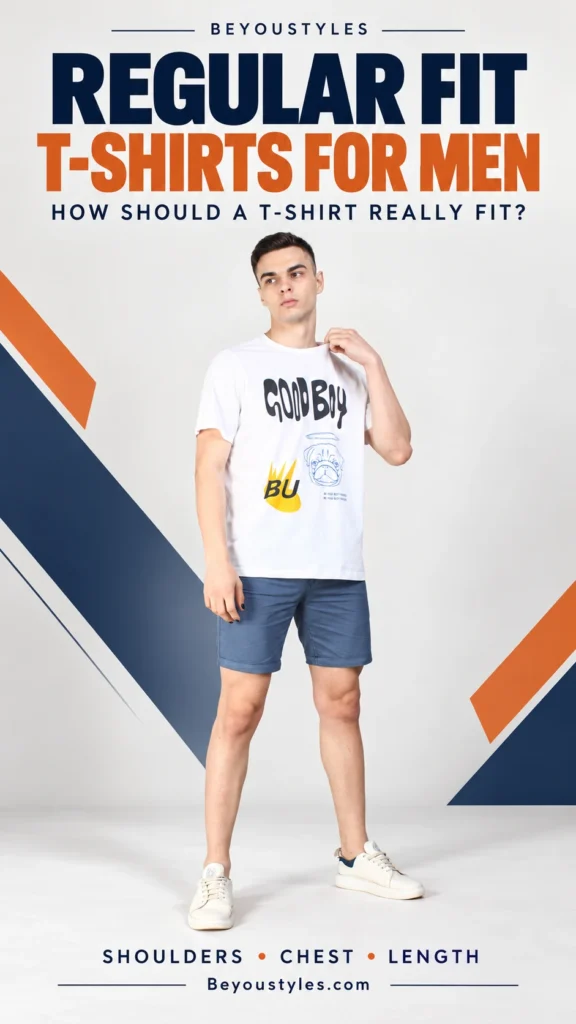
A T-shirt can be the simplest item in your wardrobe and still be surprisingly difficult to buy. One feels tight across the chest, another hangs too low, and a third fits well until you sit down. When choosing regular fit T-shirts for men, the aim is a comfortable shape that follows your proportions without clinging or leaving more fabric than you want.
The right fit depends on more than the size label. Shoulder placement, chest room, sleeve shape and body length all matter. This guide explains what to check when trying on a tee and how to compare measurements before ordering online.
What Is a Regular Fit T-Shirt?
A regular fit generally describes a conventional cut with some room through the chest and waist. It usually feels less close to the body than a slim fit and less deliberately roomy than an oversized fit. The exact shape varies between brands, so treat “regular fit” as a starting point rather than a universal sizing standard.
For a simple everyday option, the Beyoustyles Plain White T-Shirt is listed with a regular unisex fit, a round neck and 100% cotton fabric. Its plain design makes it useful for judging the overall silhouette without a graphic distracting from the fit.
How Should a Regular Fit T-Shirt Sit?
Check the whole garment rather than trying to perfect one measurement in isolation. A tee can fit your chest but have sleeves that feel restrictive or a length that does not suit your trousers.
| Area | What to look for | What to investigate |
|---|---|---|
| Shoulders | Seams near the natural shoulder edge in a conventional cut | Seams pulling inward or dropping farther down than intended |
| Chest | Comfortable room with a smooth resting shape | Tension lines or more loose fabric than you prefer |
| Waist | Fabric falling comfortably without gripping | Clinging when seated or excessive bunching |
| Sleeves | Room to bend and reach | Openings squeezing your arms or unwanted sleeve flare |
| Length | Enough coverage for your preferred untucked or tucked styling | A hem that rides up easily or feels unnecessarily long |
| Neckline | A round neck that sits comfortably | Pressure at the neck, sagging or an opening you dislike |
1. Start with the Shoulders
For a standard set-in sleeve, the shoulder seam should usually sit close to the point where your shoulder meets your upper arm. This gives the shirt a balanced starting shape. A seam noticeably inward may indicate insufficient shoulder room; a seam much farther down can suggest a roomier cut or larger size.
Some T-shirts intentionally use dropped shoulders. That is a design choice, so do not judge every tee by the same seam position. Check the stated cut and product photographs alongside the measurements.
2. Check Chest and Waist Room Together
A regular fit should let you breathe and move comfortably. While standing naturally, look for fabric that rests over the chest without being stretched taut. Then sit down. If the shirt grips your midsection or feels uncomfortable, its measurements or shape may not suit you.
A little space is useful, but the amount is personal. You may want a cleaner silhouette for layering under an overshirt or more room for relaxed weekends. Avoid choosing a smaller size solely to make the chest look more fitted if it makes the waist uncomfortable.
3. Look at Sleeve Length and Opening
For a conventional short-sleeve tee, a sleeve ending around the middle of the upper arm is a common starting point. Your proportions and preferred style can make a shorter or longer sleeve equally suitable.
Bend your elbows and reach forward. The sleeve opening should allow comfortable movement. If the sleeves fit but the torso does not, try a different cut rather than assuming another size will solve every issue.
4. Choose Length for the Way You Dress
An untucked tee should cover your waistband comfortably while giving the proportions you want. A hem somewhere around the upper-to-middle fly area is a useful starting point, not a fixed rule. Trouser rise, torso length and the shirt’s design all change where it sits.
Try the shirt with the jeans or chinos you wear most often. Sit, bend and reach overhead to see how much the hem moves. Some movement is normal. The important question is whether the coverage remains comfortable for your routine.
If you usually tuck in your T-shirt, allow enough length to keep it in place. If you wear it untucked with shorts, check that the hem does not hide more of the shorts than you prefer.
Regular Fit vs Slim Fit vs Oversized Fit
| Fit | Typical shape | Main consideration |
|---|---|---|
| Regular | Some room through the chest and waist | Comfort and proportion for everyday wear |
| Slim | A closer shape, often with a narrower torso | Enough room across the chest and midsection |
| Oversized | Deliberately generous dimensions | Intended shoulder, sleeve and body proportions |
Sizing up in a regular tee does not necessarily reproduce a purpose-designed oversized fit. It can add length or change shoulder placement in ways you did not intend. Similarly, sizing down does not automatically create a comfortable slim fit.
For another perspective on measurements and closer silhouettes, read our True Classic Tees size guide. Use the size chart for the specific garment you are buying rather than transferring one product’s sizing assumptions to another.
How to Choose Your Size Online
A well-fitting tee you already own is a useful reference. Lay it flat without stretching it, smooth out the fabric gently and record its dimensions.
- Chest width: measure across the garment at the underarms.
- Body length: follow the same start and end points used by the seller.
- Shoulder width: compare seam-to-seam measurements when provided.
- Sleeve length: check the seller’s measuring method before comparing.
- Units and definitions: confirm inches or centimetres and whether chest means flat width or full circumference.
Do not compare a flat garment chest width directly with your body’s chest circumference. They are different measurements. If the chart does not explain its method, ask before ordering.
When between sizes, consider every dimension. The larger option may provide the chest room you want but also add unwanted length. Height and model photographs can help with context, but they do not replace measurements.
How Fabric Affects the Fit
The way a T-shirt falls depends on fabric construction and finishing as well as its cut. GSM measures fabric weight per square metre; it does not describe the garment’s dimensions or guarantee a particular drape.
The Plain White product combines 180 GSM cotton with a bio-wash finish and pre-washed, pre-shrunk preparation. These are useful details to consider alongside its regular fit. Pre-shrinking is intended to reduce later dimensional change, but correct care still matters.
For broader buying considerations, our True Classic Tees review discusses fit, comfort and everyday styling. Keep your own fit preferences and the exact product specification at the centre of the decision.
Try the Movement Test Before Deciding
Once you have checked the shirt in the mirror, test it in the positions you actually use throughout the day:
- Reach forward as if picking up a bag.
- Raise your arms and check the hem movement.
- Sit down and notice the room at the waist.
- Put on your usual overshirt or jacket to check layering comfort.
A shirt should suit more than a still photograph. If the fabric pulls, twists or restricts you during ordinary movement, reconsider the size or cut.
Styling a Regular Fit White T-Shirt
A plain white round neck tee works with denim, chinos and casual shorts. Wear it on its own for a simple outfit, or use it under an open shirt when you want an extra layer. Choose bottoms with proportions that suit the tee’s length rather than relying on one rule for every outfit.
For warm-weather outfit ideas, explore our True Classic Tees summer guide. This fit guide focuses on how the garment sits; the summer article provides a separate styling perspective.
Common Fit Mistakes to Avoid
- Buying the same size across brands without checking measurements.
- Choosing solely by height or weight.
- Checking the chest while overlooking body length.
- Sizing down even when movement becomes uncomfortable.
- Expecting every unisex or regular-fit garment to have identical proportions.
- Using high drying heat to deliberately shrink a shirt into the desired fit.
Follow the garment’s care label to help preserve the fit you selected. A washing method that changes length or width unpredictably is a poor substitute for choosing suitable measurements in the first place.
Frequently Asked Questions
Should regular fit T-shirts for men feel loose?
They generally offer some room without an intentionally oversized shape. The right amount of space depends on your measurements and preference. You should be able to sit and move comfortably.
Should I size up for a regular fit?
Check the specific size chart first. A regular cut may already provide the room you need. Sizing up changes more than chest width, including length and shoulder placement.
Where should the shoulder seam sit?
On a conventional set-in sleeve, near the natural shoulder edge is a useful starting point. Dropped-shoulder designs intentionally sit farther down.
Is regular fit suitable for layering?
Yes, if the shirt has enough room to move and sits comfortably beneath your chosen outer layer. Check for bunching at the waist and sleeves.
Can a pre-shrunk cotton T-shirt change size after washing?
Yes. Pre-shrinking reduces the potential for later shrinkage but does not eliminate it under every condition. Follow the care label when washing and drying.
Find Your Everyday Fit
A good regular fit begins with comfortable shoulders, enough chest and waist room, suitable sleeves and a useful length. Compare actual garment dimensions, try the movement test and choose a shape that works with your daily clothes.
For a clean cotton essential, explore the Plain White regular fit T-Shirt from Beyoustyles. You can also browse our men’s cotton T-shirts and unisex tees collection to compare plain and graphic styles.


