
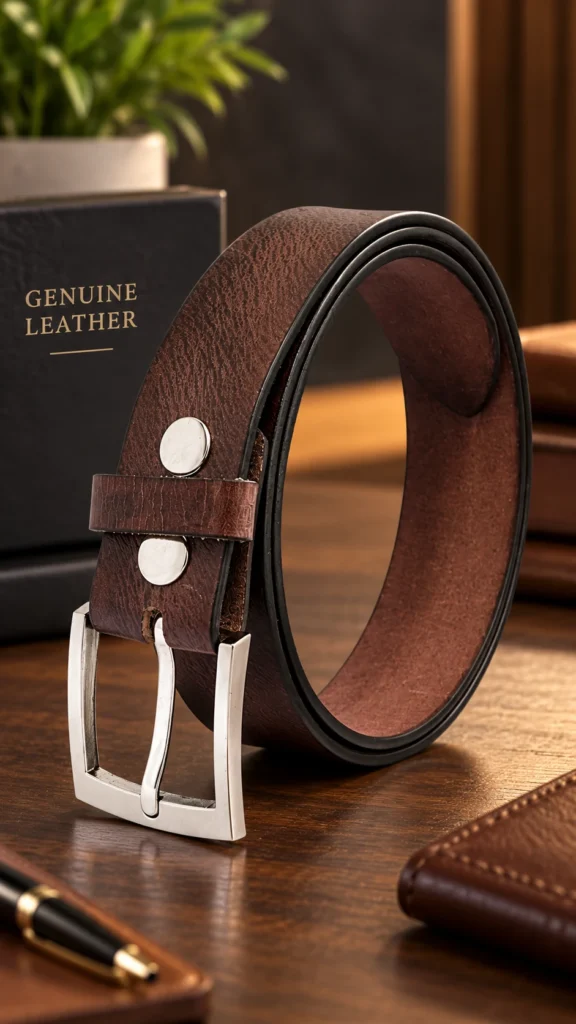
A genuine leather belt is one of those wardrobe essentials that can be worn for years when it is looked after properly. Unlike many synthetic belts, real leather develops natural character with age, but daily wear, moisture, heat, dirt, and improper storage can gradually affect its appearance and flexibility.
Learning how to care for a leather belt does not require a complicated routine. Simple habits such as gentle cleaning, keeping the leather dry, storing it correctly, and avoiding excessive bending can help preserve its shape and finish.
If you are looking for a belt designed for regular office, formal, and business-casual wear, the Premium Leather Belt for Men – Classic Brown from Beyoustyles is made from genuine leather and designed for everyday versatility.
Why Genuine Leather Belt Care Matters
A belt goes through considerable stress during normal use. It bends around the waist, passes through belt loops, is pulled through the buckle, and is repeatedly fastened through the same holes.
Over time, poor care can contribute to:
- Dry or stiff leather
- Premature cracking
- Surface damage
- Distortion around belt holes
- Loss of shape
- Damage caused by excess moisture
- Unnecessary wear around the buckle
Good leather belt care is therefore less about constantly treating the belt and more about protecting it from the conditions that cause unnecessary deterioration.
1. Wipe Your Leather Belt After Regular Wear
One of the easiest ways to care for a genuine leather belt is simply to keep its surface clean.
Dust, perspiration, and everyday dirt can gradually collect on the leather. After wearing the belt, particularly for a long day, gently wipe it with a clean, soft, dry cloth.
For minor surface dirt, a slightly damp soft cloth can be used carefully. Avoid soaking the leather. After wiping, allow the belt to dry naturally before storing it.
Regular light cleaning is generally preferable to waiting until heavy dirt has accumulated.
2. Keep a Genuine Leather Belt Away From Excess Water
Leather is a natural material, so excessive moisture should be avoided.
If your belt gets wet in rain or from an accidental spill, do not panic and do not try to dry it rapidly with direct heat.
Instead:
- Gently blot excess moisture with a clean cloth.
- Lay or hang the belt in a well-ventilated area.
- Allow it to dry naturally at room temperature.
- Keep it away from heaters, radiators, hair dryers, and intense direct sunlight.
Strong artificial heat can dry leather too quickly and may negatively affect its flexibility and appearance.
3. Never Store a Leather Belt While It Is Damp
This is an important part of genuine leather belt care.
After a long day, especially in warm or humid weather, give your belt some time to air before placing it inside a closed wardrobe or drawer.
Storing leather while it is damp can create an undesirable environment for the material. Letting the belt return to a dry condition before storage is a simple habit that can help maintain it over the long term.
4. Store Your Leather Belt Properly
How you store a belt can be almost as important as how you clean it.
A genuine leather belt should ideally be stored in a way that does not force sharp folds or permanent bends into the leather.
Hanging a Leather Belt
Using a belt hanger is a simple option. Hanging allows the belt to remain relatively straight and helps reduce unnecessary creasing.
Rolling a Leather Belt
If drawer storage is more convenient, loosely roll the belt rather than folding it sharply. Avoid making the roll excessively tight.
The objective is to maintain the belt’s natural shape without putting unnecessary stress on the leather.
5. Avoid Folding the Belt in Half
A common storage mistake is folding a leather belt in half and placing it in a drawer.
Repeatedly creating a sharp bend in the same location can put unnecessary stress on the leather. Over time, that area may become more visibly creased than the rest of the strap.
Hang the belt or use a loose roll instead.
6. Pay Attention to the Buckle Area
The buckle and the leather immediately surrounding it experience considerable movement.
When fastening your belt, avoid pulling it more aggressively than necessary. Guide the pin naturally through the appropriate hole rather than forcing the leather.
You should also periodically check the buckle area for:
- Loose hardware
- Unusual stretching
- Damage around the holes
- Dirt around the buckle
A well-constructed belt starts with good materials and dependable hardware. Our guide to durable leather belts and accessories for men explains why leather quality, buckle construction, edge finishing, and other details matter when choosing a belt for regular use.
7. Don’t Wear the Belt Too Tight
A belt should provide a secure and comfortable fit without being excessively tight.
Constantly pulling a belt extremely tight can put additional pressure on the holes, buckle, and leather strap. Ideally, use the hole that provides a natural, comfortable fit.
Correct sizing therefore contributes not only to comfort but also to how the belt wears over time.
8. Rotate Your Leather Belts When Possible
If you own more than one leather belt, rotating them can be useful.
Wearing exactly the same belt every day means the same strap, buckle, and adjustment hole experience continuous use. Alternating between a black, brown, or other leather belt gives each belt some rest between wears.
It also makes matching different outfits easier.
Beyoustyles offers a range of genuine leather belts for men in different colours, finishes, textures, and buckle styles for casual, office, formal, and everyday outfits.
9. Be Careful With Leather Conditioners and Cleaning Products
Not every cleaning or conditioning product is suitable for every type or finish of leather.
Before applying any leather-care product to an entire belt, read the manufacturer’s directions and test a very small, inconspicuous area first.
Avoid automatically applying household cleaners, harsh chemicals, detergents, or products not intended for the specific leather finish.
More product does not necessarily mean better leather care. The goal should be to preserve the material rather than continuously coat or saturate it.
10. Protect Your Belt From Excessive Heat and Sunlight
Do not leave a genuine leather belt for prolonged periods next to strong heat sources or in intense direct sunlight.
For example, avoid storing it:
- Next to a radiator or heater
- Against a hot appliance
- In prolonged direct sunlight
- Inside excessively hot environments for extended periods
A cool, dry, ventilated storage area is generally a better choice.
11. Treat Natural Leather Like a Natural Material
One of the attractions of genuine leather is that it does not necessarily remain visually identical throughout its life.
Natural variations in grain and texture are part of leather’s character. With use, the surface may gradually develop its own appearance.
Instead of expecting genuine leather to behave like a synthetic coated material, focus on keeping it clean, dry, flexible, and correctly stored.
12. Start With a Quality Leather Belt
Care can help a belt last, but care cannot compensate for poor construction or low-quality materials.
When buying a belt, consider the leather, buckle, edge finishing, fit, and intended use. A belt that is appropriate for your wardrobe and built for repeated wear gives you a better foundation for long-term use.
If you’re unsure what to look for before buying, read our complete guide to choosing the best genuine leather belts for men. It covers leather quality, buckle style, sizing, colour choice, and everyday use.
A Leather Belt for Office, Formal and Everyday Wear
For men who regularly wear trousers, chinos, or business-casual outfits, a versatile brown belt can work across multiple occasions.
The Beyoustyles Premium Leather Belt for Men – Classic Brown is crafted from genuine leather and features a rich dark-brown finish with a polished silver metal buckle. Its clean design makes it suitable for office wear, business meetings, formal occasions, chinos, and smart-casual outfits.
Choosing a versatile belt and caring for it correctly can give you an accessory that becomes part of your regular wardrobe rather than something that needs frequent replacement.
Quick Leather Belt Care Checklist
- Wipe away surface dust regularly.
- Do not soak genuine leather in water.
- Let a wet belt dry naturally.
- Keep it away from strong direct heat.
- Never store the belt while damp.
- Hang it or roll it loosely for storage.
- Avoid sharp folds.
- Do not overtighten the belt.
- Keep the buckle area clean.
- Use leather-care products cautiously.
- Rotate belts when practical.
- Choose the correct belt size.
Frequently Asked Questions About Leather Belt Care
How do you care for a genuine leather belt?
Keep the belt clean and dry, wipe away surface dirt with a soft cloth, avoid excessive water and heat, and store it hanging or loosely rolled rather than sharply folded. If using a leather-care product, make sure it is suitable for the belt’s leather and finish.
How can I make my leather belt last longer?
Avoid excessive moisture, strong heat, overtightening, and improper storage. Keeping the belt clean, allowing it to dry naturally when damp, and rotating it with other belts can also reduce unnecessary wear.
Can a genuine leather belt get wet?
Accidental moisture can happen, but avoid soaking the belt. Blot excess water gently and allow the leather to air-dry naturally away from direct heat.
Should I hang or roll a leather belt?
Either can work. Hanging helps the belt remain straight, while loose rolling is convenient for drawer storage. Avoid sharp folds or very tight rolls.
Can I use household cleaner on a leather belt?
It is better to avoid harsh household cleaners or chemicals that are not intended for the particular leather finish. Always follow the instructions for any leather-care product and test it first on a small, inconspicuous area.
How often should I clean my leather belt?
There is no single schedule suitable for every belt. Lightly wiping away dust and surface dirt when needed is a sensible routine. More intensive cleaning should depend on how frequently the belt is worn and the manufacturer’s care recommendations.
Final Thoughts
Knowing how to care for a leather belt comes down to a few simple habits: keep it reasonably clean, protect it from excess moisture and heat, avoid unnecessary stress, and store it correctly.
Good care is especially worthwhile when you start with a well-made genuine leather belt. With the right combination of material, construction, fit, and everyday care, a leather belt can remain a dependable part of your wardrobe for years.


